
10% OFF Storewide – Automatically applied at Checkout
Quick answer
A rechargeable table lamp runs between about 12 and 170 hours on a single charge, depending on the model and the brightness you use. Over years of use, the battery itself gradually holds less charge, as all lithium-ion cells do. With simple care, and on models whose battery can be replaced, a good cordless lamp stays useful long after a disposable one would have been discarded.
Last reviewed: November 2026
Key takeaways
The honest answer is that it depends on the lamp and the setting. Full brightness draws the most power and gives the shortest runtime; the softer, warmer levels most people use for dining or relaxing draw far less and last much longer. The table below shows verified figures across a few of the ranges we carry.
| Model | Battery runtime | Notes |
|---|---|---|
| Zafferano Poldina Table Lamp | 12h full / 18 to 28h ambient / ~48h minimum | Stepless touch dimmer; contact charging base and USB |
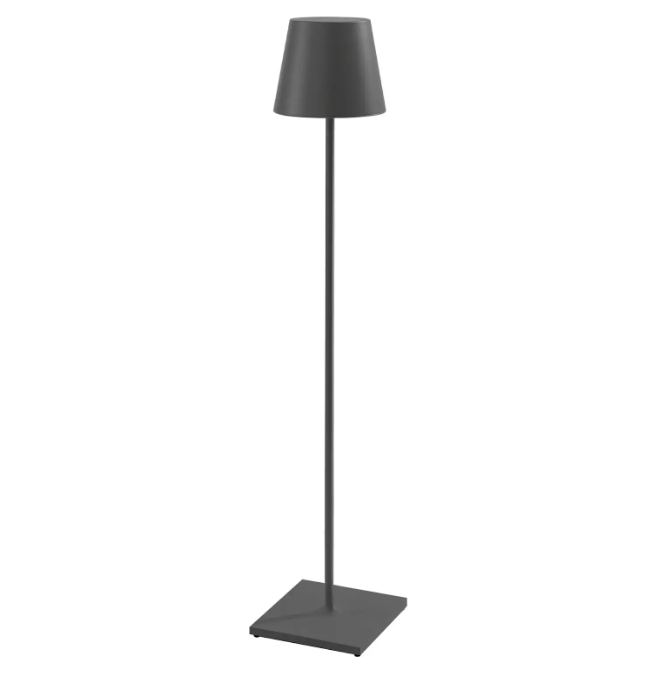
| Zafferano Poldina XXL (floor) | 15h full / 60h+ low | USB-C charging base, ~20h to charge, memory function |
| Villeroy & Boch Bergamo | Up to 90h | Charging base included |
| Villeroy & Boch Modena 21cm | Up to 40h | IP44 rated |
| Sompex Troll | Up to 96h | Charging base included |
| Sompex Volume | Up to 170h | Around 6.5h to charge fully |
Charging time is short relative to runtime. A Sompex Volume, for example, reaches a full charge in about 6.5 hours and then runs for far longer than any single evening requires.
Every rechargeable lamp uses a lithium-ion battery, the same chemistry found in phones and laptops. These cells age with use. Each charge and discharge is a cycle, and over many cycles the maximum capacity slowly declines, so a lamp that once ran all evening on one charge may, after a few years, need topping up sooner. This is normal and gradual, not a fault, and for a lamp used a few evenings a week it takes a long time to become noticeable.
What accelerates the decline is heat, being left fully flat for long periods, and constant deep discharging. Avoiding those is most of what battery care involves.
A few habits keep a cordless lamp performing well for years:
This is where design intent matters. Some lamps are built so the battery can be replaced rather than the whole lamp discarded, and Luxe Lights stocks the packs. The double pack takes one unit for a Poldina Table Lamp, Poldina Mini, Poldina Reverso or Poldina wall lamp, and three for the Poldina XXL floor lamp; the single pack covers the Home Solar table lamp. The Zafferano Flaminia uses a replaceable 5200mAh cell of its own. On models where the cell is not user-replaceable, ask about service options before assuming a lamp has reached the end of its life.
If you want a lamp to hold its charge for years, the things to avoid are worth naming plainly. Prolonged heat is the first. A lithium-ion battery left on a sun-baked balcony floor or a hot windowsill ages faster than one kept in a shaded, temperate spot, which in Singapore's climate is a real consideration for outdoor models. The second is deep, repeated discharge. Draining a lamp to completely flat every time, then leaving it there, is harder on the cell than topping up from a partial charge. The third is neglect during storage; a lamp packed away empty for months will degrade more than one stored part-charged and occasionally refreshed.
None of this requires fuss. In practice it means keeping outdoor lamps out of direct heat when they are not in use, recharging before the battery is fully spent, and giving a stored lamp an occasional top-up. These habits cost nothing and are most of what separates a battery that lasts years from one that fades early.
Larger lamps carry larger batteries, which changes the runtime picture. The Zafferano Poldina XXL floor lamp runs 15 hours at full brightness and 60 hours or more at its low setting, and takes around 20 hours to charge fully through its USB-C base. It also holds a memory function, returning to your last setting when switched back on. A compact table lamp charges faster and runs for a shorter, though still generous, span. The point is to match expectations to the lamp: a floor lamp is built to anchor a room for long evenings, while a table lamp is built to be topped up more often and moved around freely. Our cordless floor lamp guide covers that choice.
Modern lithium-ion lamps manage their own charging and stop drawing power once full, so an occasional overnight charge is not a concern. The habit worth avoiding is the opposite one, letting a lamp sit dead flat for long stretches, which is harder on the cell than a full battery is.
If you are still deciding between a battery and a cable, our comparison of rechargeable and plug-in table lamps sets out the trade-off, and our guide to dimming explains why a lower setting stretches a charge.
Between roughly 12 and 170 hours depending on the model and brightness. A Zafferano Poldina gives about 12 hours at full brightness and up to 48 at its lowest, while a Sompex Troll runs up to 96 hours. Dimming extends every figure.
Use a lower, warmer setting. Full brightness drains fastest, and the ambient levels suited to dining or relaxing can more than double runtime from a single charge.
On much of the Zafferano range, yes. Luxe Lights stocks replacement packs, with one double pack needed for a Poldina Table Lamp and three for the Poldina XXL floor lamp. The Flaminia has a replaceable cell of its own. For other models, ask what spares are available.